

Hello, I'm coming to Hanoi with 1 friend 19.09. I'm thinking about 1 day trip from Hanoi to Long Coc. Would it be possible to...
Let the scene unfold like this: the air is thick with the scent of incense and chung cakes, fireworks explode in brilliant bursts against the night sky, and families across Vietnam - and around the world - gather together with hearts full of hope. This isn't just any holiday. This is Tet Nguyen Dan, Vietnam's Lunar New Year, the most sacred and joyous celebration in Vietnamese culture.
From the emerald-green sticky rice cakes wrapped lovingly in dong leaves to the spectacular midnight fireworks that light up the sky, every Tet tradition tells a story - a story of family, renewal, and the timeless connection between past, present, and future.
Are you ready to dive into this cultural treasure? Let's unwrap the magic of Vietnam's most important holiday!
1. What exactly is Tet Nguyen Dan?
2. The fascinating origins of Tet
2.1. How long have Vietnamese people celebrated Tet?
2.2. Tet and the Lunar calendar magic
2.3. Tet and the "eight festivals" tradition
3. Why Tet matters: The deep meaning behind the magic
3.1. Family reunion: The heart of Tet
3.2. The ultimate fresh start
3.3. Settling up and starting fresh
3.4. Three days of peace, positivity, and pure joy
4. Beautiful Tet traditions you'll love
4.1. Sending the Kitchen Gods to Heaven
4.2. Wrapping Banh Chung and Banh Tet: The ultimate family bonding
4.3. Visiting ancestral graves: Honoring those who came before
4.4. Tat Nien ceremony: Saying goodbye to the old year
4.5. Xong dat: The first footer tradition
4.6. Tet greetings and lucky money (Li Xi)
4.7. Spring outings and temple visits
4.8. Fireworks at midnight: Lighting up the new year
5. Regional Tet flavors: North, Central, and South
6. Global recognition: Tet goes international!
7. Preserving Tet traditions in a modern world
2. The fascinating origins of Tet
2.1. How long have Vietnamese people celebrated Tet?
2.2. Tet and the Lunar calendar magic
2.3. Tet and the "eight festivals" tradition
3. Why Tet matters: The deep meaning behind the magic
3.1. Family reunion: The heart of Tet
3.2. The ultimate fresh start
3.3. Settling up and starting fresh
3.4. Three days of peace, positivity, and pure joy
4. Beautiful Tet traditions you'll love
4.1. Sending the Kitchen Gods to Heaven
4.2. Wrapping Banh Chung and Banh Tet: The ultimate family bonding
4.3. Visiting ancestral graves: Honoring those who came before
4.4. Tat Nien ceremony: Saying goodbye to the old year
4.5. Xong dat: The first footer tradition
4.6. Tet greetings and lucky money (Li Xi)
4.7. Spring outings and temple visits
4.8. Fireworks at midnight: Lighting up the new year
5. Regional Tet flavors: North, Central, and South
6. Global recognition: Tet goes international!
7. Preserving Tet traditions in a modern world
*****
1. What exactly is Tet Nguyen Dan?
Tet Nguyen Dan goes by many names: Tet Ca (Great Tet), Tet Ta (Our Tet), or simply Tet. It's the Vietnamese Lunar New Year - the moment when the old year waves goodbye and a fresh, sparkling new year bursts onto the scene. But it's so much more than just a date change on the calendar.
The name "Nguyen Dan" comes from ancient Chinese characters: "Nguyen" means "first" or "beginning," and "Dan" means "morning" or "dawn." Put them together, and you get "the first morning of the new year" - a beautiful metaphor for new beginnings, fresh starts, and boundless possibilities.
Think of Tet as the ultimate reset button for Vietnamese culture. It marks the transition between years, the beginning of a new agricultural cycle, and the return of spring with its four seasons. For Vietnamese people everywhere - whether in Hanoi, Ho Chi Minh City, or halfway across the globe - Tet is the time to come home.
2. The fascinating origins of Tet
2.1. How long have Vietnamese people celebrated Tet?
The exact origin of Tet is shrouded in the mists of time, and historians still debate its precise beginnings. According to renowned historian Tran Van Giap, Tet has been celebrated in Vietnam since at least the first century AD. But the legend of "Banh Chung, Banh Day" (the sticky rice cakes) suggests it might go back even further - all the way to the Hung Kings era.
The story goes like this: Prince Lang Lieu, the 18th son of the Hung King, created square Banh Chung to represent Earth and round Banh Day to represent Heaven. His simple yet profound offering won his father's approval and the throne itself. Whether myth or history, this tale has shaped Vietnamese Tet traditions for thousands of years.
2.2. Tet and the Lunar calendar magic
Here's where it gets cool: Tet follows the lunisolar calendar, which tracks both the moon and the sun. Scholar Nguyen Van Huyen explained that each lunar month begins with a new moon, and the new year kicks off with the first new moon after the sun crosses south of the equator - marking winter's end.
This is why Tet bounces around on the Western calendar, typically landing somewhere between late January and early February. The official Tet celebration traditionally runs from December 23rd (lunar calendar) through January 7th, giving everyone plenty of time to party, reconnect, and recharge.
2.3. Tet and the "eight festivals" tradition
According to scholar Tran Van Giap, the word "Tet" evolved from the Chinese character "Tiet," which relates to the concept of "Bat Tiet" - the eight seasonal transition days marking climate changes throughout the year. But Vietnamese culture transformed this astronomical concept into something far more festive and meaningful.
Vietnam's eight traditional festivals include Nguyen Dan, Thuong Nguyen, Han Thuc, Doan Ngo, Trung Nguyen, Trung Thu, Thuong Tan, and Dong Chi. Among all these, Nguyen Dan reigns supreme as Tet Ca - the Great Festival - celebrated with the most grandeur, meaning, and joy.
3. Why Tet matters: The deep meaning behind the magic
3.1. Family reunion: The heart of Tet
At its core, Tet is about coming home. No matter how far you've traveled or how busy life has become, Tet pulls you back like a magnet. Children return from distant cities, overseas Vietnamese book flights months in advance, and families gather around tables loaded with traditional foods to share stories, laughter, and love.
Renowned researcher Toan Anh beautifully captured this: "The atmosphere of Tet Eve in Vietnamese hearts is truly sacred. At that moment, the living and the departed seem to have an invisible meeting in another realm." Tet bridges not just distances, but generations and even the boundary between this world and the next.
3.2. The ultimate fresh start
Tet represents the beginning of everything: a new year, a new month, a new season, and a new agricultural cycle. This unique convergence makes Vietnamese people believe that what happens during the first days of Tet will influence the entire year ahead.
Scholar Nguyen Van Huyen wrote: "That morning is the most sacred morning. It foretells the fortunate events of the lunar months to come. And all the gestures we make in those first hours have the power of a precious charm." This is why Tet is filled with carefully chosen words, deliberate actions, and positive intentions - everyone's trying to set the perfect tone for the year ahead!
3.3. Settling up and starting fresh
Here's a cultural quirk that makes Tet special: Vietnamese tradition demands settling all debts and finishing all unfinished business before the new year arrives. It's like Marie Kondo-ing your entire life - financial, emotional, and spiritual.
In traditional offices, work stopped on December 25th (lunar calendar), administrative seals were locked away, and everyone focused on Tet preparations. Work didn't resume until January 25th of the new year. This practice embodied the Vietnamese belief in entering the new year with a clean slate, peace of mind, and a light heart.
3.4. Three days of peace, positivity, and pure joy
Scholar Nguyen Van Vinh described Tet as "three days of tranquility to remember our ancestors, when their guardian spirits return among the living." During these precious days, people set aside their worries, stop complaining, and focus exclusively on positive thoughts, kind words, and heartfelt blessings.
Tet is "a magnificent dream of happiness" - a suspension of ordinary time when competition pauses, jealousy fades, and everyone gets to simply be together in joy. It's a collective exhale after a year of hustle, a cultural permission slip to just enjoy life.
4. Beautiful Tet traditions you'll love
4.1. Sending the Kitchen Gods to Heaven
According to Vietnamese folklore, every household has Kitchen Gods (Ong Cong, Ong Tao) who watch over the family's hearth. On December 23rd of the lunar calendar, these gods ride carp fish up to heaven to report the family's deeds - good and bad - to the Jade Emperor.
Families prepare a farewell ceremony with offerings, hoping for a positive report card. Once the Kitchen Gods depart, the official Tet countdown begins! (Fun fact: You'll see live carp being sold everywhere in Vietnam during this time. After the ceremony, many families release them into rivers and ponds as a gesture of kindness.)
4.2. Wrapping Banh Chung and Banh Tet: The ultimate family bonding
Making Banh Chung (square cakes in the North) and Banh Tet (cylindrical cakes in the South) is pure nostalgia wrapped in banana leaves. This tradition requires skill, patience, and - most importantly - teamwork.
Families gather to soak sticky rice, season mung beans, cut pork belly, fold banana leaves into perfect packages, and boil the cakes overnight. The result? Delicious parcels that symbolize Earth and sky, filial piety, and family love. Plus, the house smells amazing for days!
4.3. Visiting ancestral graves: Honoring those who came before
In the days leading up to Tet, families travel to their ancestral hometowns to clean and beautify their ancestors' graves. They bring flowers, incense, and offerings to honor those who paved the way.
This tradition embodies the Vietnamese principle of "uong nuoc nho nguon" (when drinking water, remember the source) - a beautiful reminder to never forget our roots and the sacrifices of previous generations.
4.4. Tat Nien ceremony: Saying goodbye to the old year
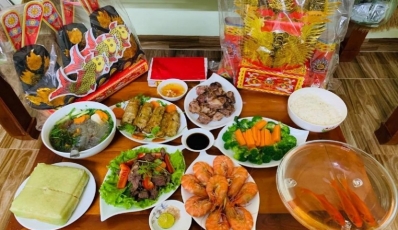
The Tat Nien ceremony happens on New Year's Eve, when families gather around the ancestral altar to bid farewell to the old year and welcome the new one. The offering table is meticulously prepared with incense, flowers, fruits, candies, and traditional foods - a display of gratitude and hopes for blessings in the coming year.
This solemn yet warm ceremony reinforces family bonds and spiritual connections, reminding everyone of where they come from and what truly matters.
4.5. Xong dat: The first footer tradition
Xong dat (literally "breaking ground") is the practice of welcoming the first person to enter your home in the new year. Vietnamese believe this person's energy will influence the
household's luck for the entire year ahead.
Families carefully select someone with an auspicious zodiac sign, a successful career, and a happy family life to be their first footer. It's basically the ultimate VIP entrance - except the stakes are 365 days of fortune!
4.6. Tet greetings and lucky money (Li Xi)
During Tet, Vietnamese people visit relatives and friends to exchange warm wishes for health, prosperity, success, and happiness. Children (and let's be honest, adults too) receive Li Xi - red envelopes containing money and good wishes.
There's even a traditional visiting order captured in this saying: "Day 1 is for father's Tet, Day 2 is for mother's Tet, Day 3 is for teacher's Tet." This reflects the priority order for showing gratitude and respect to important people in one's life.
4.7. Spring outings and temple visits
Tet is the perfect time for du xuan (spring outings)! Families stroll through parks, visit scenic spots, and make trips to temples and pagodas to pray for blessings, peace, and good fortune.
These outings aren't just about sightseeing - they're about spiritual renewal, soaking up spring's fresh energy, and feeling the optimism that comes with new beginnings.
4.8. Fireworks at midnight: Lighting up the new year
When the clock strikes midnight on Tet Eve, the sky explodes with spectacular fireworks displays across Vietnam. This modern tradition has become an inseparable part of Vietnamese New Year, bringing joy, excitement, and collective hope for the year ahead.
Whether you're watching from Hanoi's Hoan Kiem Lake, Saigon's riverfront, or your own rooftop, those colorful bursts symbolize the bright possibilities waiting in the new year.
5. Regional Tet flavors: North, Central, and South
Northern Vietnam
• Pink peach blossoms (hoa dao) are the iconic Tet flower
• Traditional five-fruit tray (mam ngu qua): pomelo, banana, persimmon, kumquat, and chili
• Square Banh Chung representing Earth
• Cool, crisp spring weather that requires cozy sweaters
Central Vietnam
• Blends Northern and Southern traditions in a unique cultural fusion
• Cylindrical Banh Tet
• Royal Hue traditions with elaborate court ceremonies during Tet
Southern Vietnam
• Vibrant yellow apricot blossoms (hoa mai) steal the show
• Five-fruit tray with a pun: custard apple, fig, coconut, papaya, mango ("cau sung dua du xai" = wishing for enough to spend)
• Cylindrical Banh Tet
• Warm, festive atmosphere of Southern spring
6. Global recognition: Tet goes international!
Big news! On December 22, 2023, the United Nations General Assembly officially recognized Tet Nguyen Dan (Lunar New Year) as a UN floating holiday. This milestone acknowledges the cultural significance of Tet for nearly 2 billion people worldwide.
Vietnam joined forces with 11 other countries - including China, South Korea, Singapore, Malaysia, Indonesia, the Philippines, Laos, and Cambodia - to champion this resolution. This recognition isn't just a source of Vietnamese pride; it's a global affirmation of Eastern culture's value on the international stage.
Translation? Tet has officially gone from regional celebration to world heritage status. How cool is that?
7. Preserving Tet traditions in a modern world
In our increasingly globalized world, keeping Tet traditions alive is both a challenge and a responsibility. Tet isn't just a holiday - it's the soul of Vietnamese culture, the thread connecting generations, and the heartbeat of national identity.
Sure, modern Tet might look different from celebrations centuries ago. Maybe you're ordering Banh Chung online instead of making it by hand, or video-calling relatives instead of visiting in person. But the core values remain unchanged: family reunion, ancestral gratitude, and hope for a brighter tomorrow.
Whether you celebrate Tet in a Hanoi apartment, a Ho Chi Minh City suburb, or a distant foreign city, the spirit remains the same. And that's what makes this tradition truly timeless.
Conclusion: The magic of coming home
Tet Nguyen Dan is more than a date on the calendar - it's woven into the very fabric of Vietnamese identity. It's the moment when time slows down, families reconnect, and traditions come alive with meaning and joy.
Every spring, no matter where life has taken them, Vietnamese hearts turn toward home with anticipation and faith in the good things to come. Because as scholars have written: Tet represents the beginning, and returning to Tet means returning to that beginning - a fresh start filled with hope, love, and happiness.
So whether you're Vietnamese, planning to visit Vietnam during Tet, or simply curious about this beautiful culture, we hope this guide has sparked your interest and warmed your heart. Here's wishing everyone a peaceful Tet, joyful reunions with loved ones, and a new year overflowing with health, happiness, and success!
Do you want to experience Tet and other Vietnamese traditions firsthand? Ama Journey specializes in creating immersive, culturally rich travel experiences that go beyond typical tourism. From participating in traditional Tet celebrations to exploring hidden gems across Vietnam, we'll help you discover the heart and soul of Vietnamese culture.
Let's make your Vietnam journey unforgettable - the Ama Journey way!

