
Hello, I'm coming to Hanoi with 1 friend 19.09. I'm thinking about 1 day trip from Hanoi to Long Coc. Would it be possible to...
Before the majestic limestone mountains of Trang An became a UNESCO World Heritage Site and long before Tam Coc welcomed travelers from around the world, Hoa Lu was the political and cultural heart of Vietnam.
Nestled among dramatic karst peaks in Ninh Binh Province, the King Dinh Temple and King Le Temple preserve the legacy of two remarkable rulers who laid the foundations of an independent Vietnamese nation more than a thousand years ago.
Today, these beautifully preserved temples are not only important historical landmarks but also peaceful places where visitors can step back in time and experience the origins of Vietnam's royal heritage.
Hoa Lu – Vietnam's First Imperial Capital
King Dinh Temple – Honoring the Founder of a Unified Vietnam
The Fascinating Story of King Dinh Tien Hoang
Remarkable Architecture of King Dinh Temple
Architectural Highlights of King Dinh Temple
King Le Temple – Remembering a Wise Military Leader
King Le Dai Hanh – The Defender of an Independent Nation
The Unique Beauty of King Le Temple
A Journey Through More Than One Thousand Years of History
Best Time to Visit King temples in Hoa Lu
Nearby Attractions to Combine with Hoa Lu
Why Every Visitor Should Experience Hoa Lu
Why Visit with Ama Journey?
King Dinh Temple – Honoring the Founder of a Unified Vietnam
The Fascinating Story of King Dinh Tien Hoang
Remarkable Architecture of King Dinh Temple
Architectural Highlights of King Dinh Temple
King Le Temple – Remembering a Wise Military Leader
King Le Dai Hanh – The Defender of an Independent Nation
The Unique Beauty of King Le Temple
A Journey Through More Than One Thousand Years of History
Best Time to Visit King temples in Hoa Lu
Nearby Attractions to Combine with Hoa Lu
Why Every Visitor Should Experience Hoa Lu
Why Visit with Ama Journey?
*****
Hoa Lu – Vietnam's First Imperial Capital
Located approximately 95 kilometers south of Hanoi, Hoa Lu Ancient Capital served as the capital of Vietnam from 968 to 1010 under the Dinh and Early Le Dynasties.
Surrounded by towering limestone mountains and protected by natural rivers, Hoa Lu was chosen as the nation's political center because its unique landscape formed a natural fortress. These geographical advantages helped defend the young kingdom from foreign invasions during one of the most turbulent periods in Vietnamese history.
Although the capital later moved to Thang Long (modern-day Hanoi), Hoa Lu remains one of Vietnam's most significant historical sites, offering visitors a fascinating glimpse into the country's earliest royal court.
King Dinh Temple – Honoring the Founder of a Unified Vietnam
At the heart of Hoa Lu stands the magnificent King Dinh Temple, dedicated to King Dinh Tien Hoang, one of the greatest figures in Vietnamese history.
In the 10th century, Vietnam was divided into rival territories during a period known as the "Twelve Warlords." Through remarkable military leadership and political vision, Dinh Bo Linh succeeded in unifying the country in 968, proclaiming himself King Dinh Tien Hoang and establishing the kingdom of Dai Co Viet—the first centralized independent Vietnamese state after centuries of Chinese domination.
His achievements marked the beginning of a new era of national independence and strong central governance, making him one of Vietnam's most respected historical rulers.
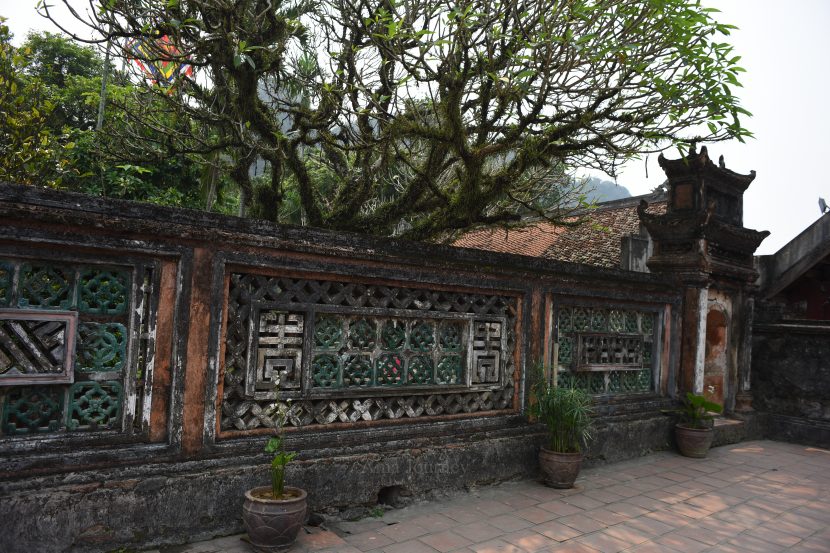
Ancient beauty of King Dinh temple
The Fascinating Story of King Dinh Tien Hoang
Long before Vietnam became a unified kingdom, the country was divided into a turbulent period known as the Era of the Twelve Warlords. Competing military leaders controlled different regions, and conflicts were constant, leaving the people in a state of uncertainty.
According to Vietnamese history, Dinh Bo Linh was born in the village of Dai Huu (present-day Gia Vien District, Ninh Binh Province). From an early age, he displayed remarkable leadership. One of Vietnam's best-known legends tells how the young Dinh Bo Linh and his friends played mock battles in the fields, using reeds as flags—a story that symbolizes his natural ability to unite and inspire others.
As he grew older, Dinh Bo Linh gradually gathered supporters and defeated the rival warlords one by one. In 968, he successfully reunited the country and proclaimed himself King Dinh Tien Hoang, establishing the kingdom of Dai Co Viet.
This marked a turning point in Vietnamese history. For the first time after centuries of Chinese domination and internal conflict, Vietnam emerged as a unified and independent kingdom with a strong central government.
Today, King Dinh is remembered not only as a brilliant military leader but also as the father of Vietnam's first stable monarchy.
Remarkable Architecture of King Dinh Temple
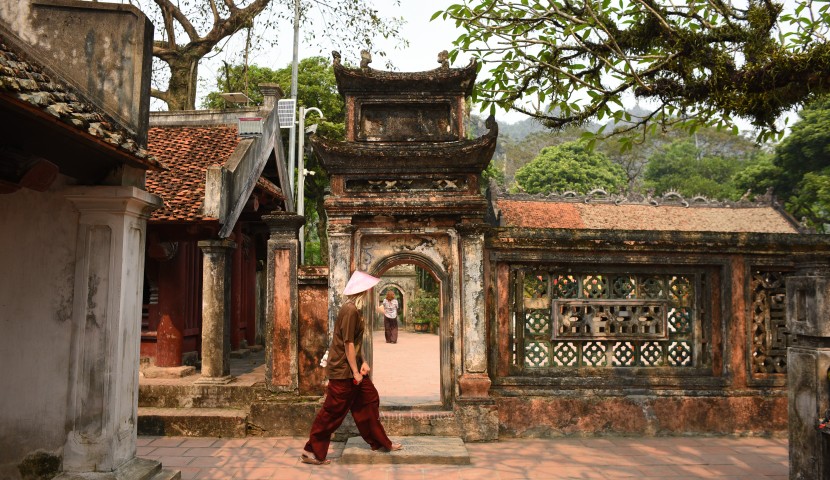
Although the original royal palace no longer survives, the present-day temple—largely rebuilt during the 17th century—beautifully reflects traditional Vietnamese architecture.
Visitors enter through an impressive stone gate before walking along a ceremonial courtyard lined with ancient trees. The temple's wooden halls showcase exquisite carvings of dragons, phoenixes, lotus flowers, and clouds, each symbolizing prosperity, power, and harmony.
Inside the main sanctuary stands a dignified bronze statue of King Dinh Tien Hoang, surrounded by finely crafted lacquered altars, incense burners, and intricate woodwork that demonstrate the exceptional craftsmanship of Vietnamese artisans.
Every architectural detail reflects the respect that later generations have shown toward the founder of Vietnam's first independent monarchy.
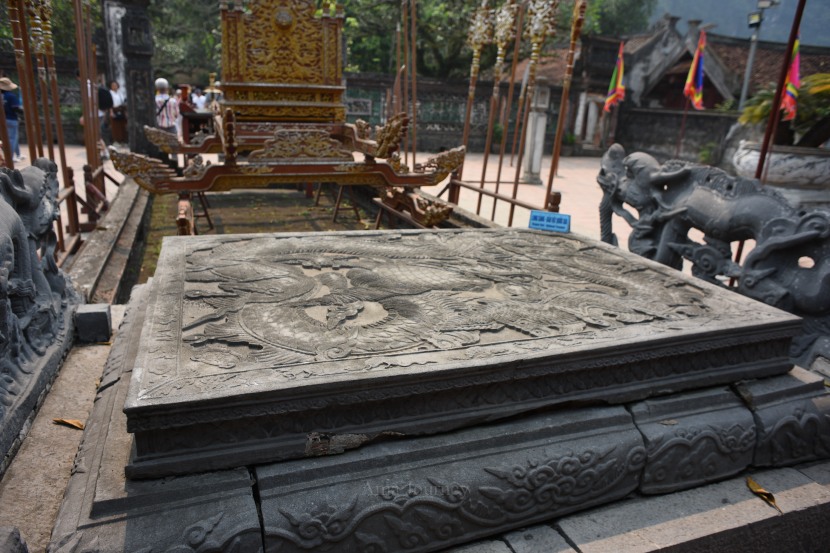
Dragon bed in the couryard of King Dinh temple
Architectural Highlights of King Dinh Temple
One of the most impressive aspects of King Dinh Temple is its harmonious architectural layout, which reflects traditional Vietnamese concepts of balance and spirituality.
Visitors first pass through the Outer Gate (Ngo Mon) before entering a spacious courtyard shaded by centuries-old trees.
The temple complex consists of three main sections:
• The Front Hall (Bai Duong), where ceremonies and offerings are conducted.
• The Incense Hall (Thieu Huong), connecting visitors with the sacred inner sanctuary.
• The Main Sanctuary (Chinh Cung), where the statue of King Dinh Tien Hoang is worshipped.
Throughout the temple, visitors will notice extraordinary stone carvings depicting dragons, phoenixes, lotus flowers, unicorns, and clouds—symbols representing imperial authority, prosperity, wisdom, and harmony.
Many historians consider these carvings among the finest examples of 17th-century Vietnamese wood and stone craftsmanship.
King Le Temple – Remembering a Wise Military Leader
Just a short walk from King Dinh Temple lies the elegant King Le Temple, dedicated to King Le Dai Hanh.
After the death of King Dinh, Le Hoan rose to leadership during a time of political uncertainty. Facing the threat of invasion from China's Song Dynasty, he successfully organized the nation's defenses and led Vietnamese forces to a decisive victory in 981, safeguarding the country's hard-won independence.
Beyond his military achievements, King Le also promoted agriculture, irrigation, and diplomatic relations, helping stabilize and strengthen the young kingdom.
His leadership ensured that Vietnam remained independent during one of its most vulnerable periods.
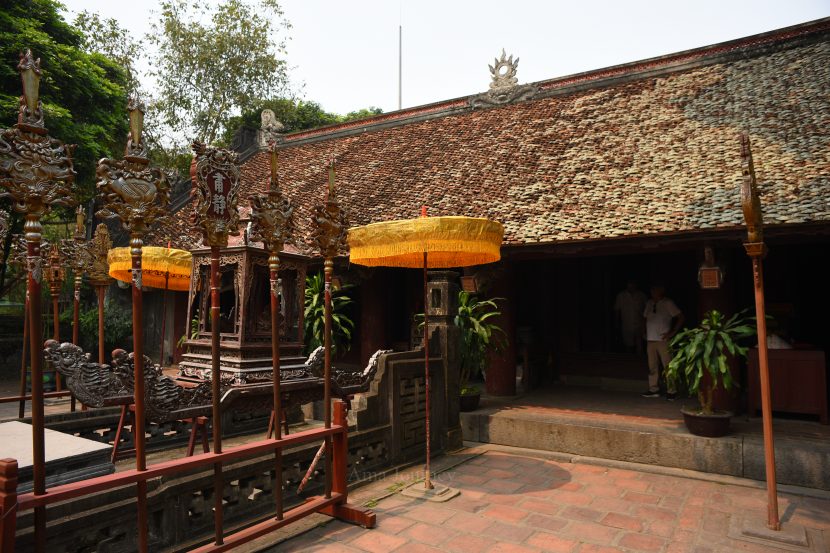
King Le temple in Hoa Lu, Ninh Binh
King Le Dai Hanh – The Defender of an Independent Nation
After the assassination of King Dinh and Crown Prince Dinh Lien in 979, Vietnam faced one of the greatest crises in its early history.
The young heir to the throne was still a child, while the Chinese Song Dynasty prepared to invade. Faced with this urgent threat, senior officials and military leaders chose Le Hoan, the kingdom's Commander-in-Chief, to lead the country.
In 981, King Le Dai Hanh commanded Vietnamese forces against the invading Song army. Through skillful military strategy and effective use of Vietnam's rivers and mountainous terrain, he achieved a decisive victory that secured the nation's independence.
Beyond the battlefield, King Le encouraged agriculture by introducing royal plowing ceremonies, improved irrigation systems, promoted trade, and strengthened diplomatic relations with neighboring kingdoms.
His reign demonstrated that military strength and economic development could go hand in hand, laying important foundations for future dynasties.
The Unique Beauty of King Le Temple
Although smaller than King Dinh Temple, King Le Temple possesses a quiet elegance that many visitors find equally captivating.
Its traditional wooden architecture, peaceful courtyards, moss-covered stone paths, and centuries-old trees create a tranquil atmosphere ideal for reflection.
Inside, beautifully carved wooden panels and ancient altars preserve the artistic heritage of Vietnam's feudal period. Visitors often notice the harmonious balance between architecture and nature—a characteristic feature of traditional Vietnamese temple design.
The surrounding limestone mountains complete the scenery, making the temple one of the most photogenic historical sites in Ninh Binh.
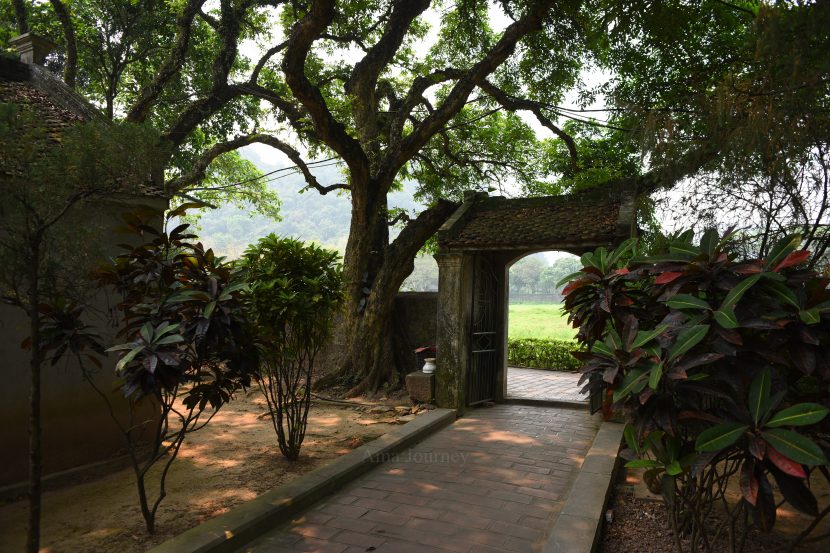
A traditional beauty in King Le temple
A Journey Through More Than One Thousand Years of History
Walking between the two temples is like traveling back over a millennium.
Unlike museums filled with display cases, Hoa Lu allows visitors to experience history in its original setting. Ancient walls, sacred courtyards, weathered stone steps, and peaceful gardens evoke the atmosphere of Vietnam's earliest royal capital.
Knowledgeable local guides often share fascinating legends surrounding the kings, the royal court, and the formation of the Vietnamese nation, bringing the stories vividly to life.
For history enthusiasts, this is one of the most rewarding destinations in northern Vietnam.
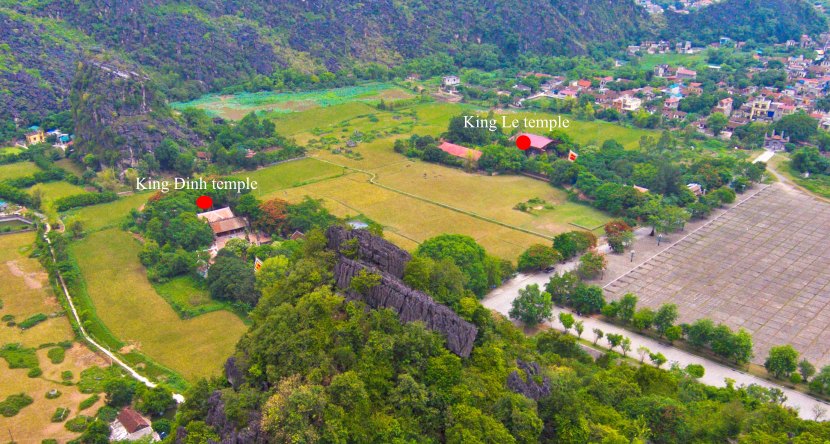
King Dinh and Le temple in Hoa Lu, Ninh Binh
Best Time to Visit King temples in Ninh Binh
Hoa Lu can be visited throughout the year, but each season offers a different experience.
Spring (February to April) is particularly pleasant, with comfortable temperatures and vibrant local festivals celebrating the region's rich cultural heritage.
Late May and early June transform the surrounding countryside into a sea of brilliant green rice fields, while September and October bring golden harvest landscapes beneath clear blue skies.
Morning visits are especially recommended, when soft sunlight illuminates the ancient temples and the site remains peaceful before larger tour groups arrive.
Nearby Attractions to Combine with Hoa Lu
One of Hoa Lu's greatest advantages is its proximity to many of Ninh Binh's most famous attractions.
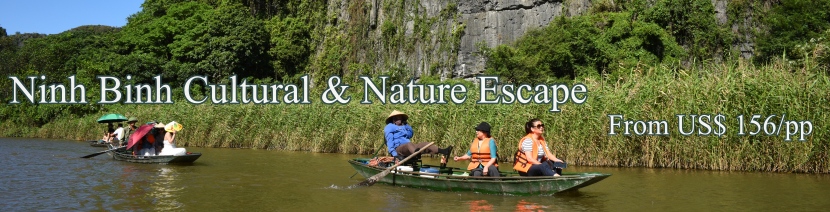
After visiting the temples, travelers can easily continue their journey to Trang An, where bamboo boats glide through spectacular cave systems recognized by UNESCO.
Nearby Tam Coc offers another unforgettable boat ride through rice fields and limestone valleys, while Hang Mua rewards visitors with breathtaking panoramic views after climbing nearly 500 stone steps.
Nature lovers may also enjoy exploring Van Long Nature Reserve or Cuc Phuong National Park, both offering exceptional biodiversity and peaceful landscapes.
Together, these destinations create the perfect full-day itinerary in Ninh Binh.
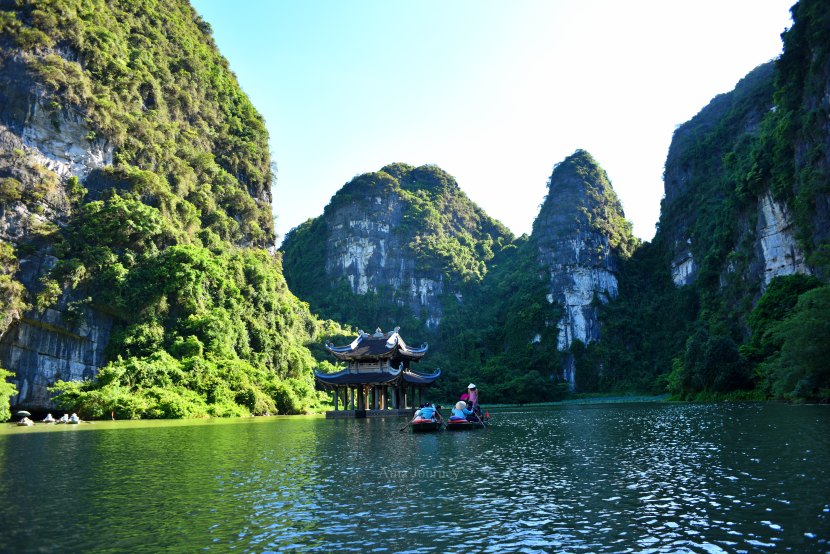
Trang An - Ninh Binh is not far from King Dinh and Le temples
Why Every Visitor Should Experience Hoa Lu
While Ninh Binh is often celebrated for its extraordinary natural beauty, its historical heritage is equally remarkable.
The King Dinh and King Le Temples remind visitors that Vietnam's identity was shaped not only by magnificent landscapes but also by visionary leaders who defended and united the nation more than a thousand years ago.
Whether you are passionate about history, architecture, photography, or cultural exploration, these temples offer an experience that goes far beyond sightseeing.
They invite you to understand the origins of Vietnam while enjoying one of the country's most beautiful historical settings.
Why Visit with Ama Journey?
At Ama Journey, we believe history becomes far more meaningful when experienced through local stories.
Our carefully designed private tours combine Hoa Lu Ancient Capital with authentic cultural encounters, scenic cycling routes, peaceful boat journeys, and hidden villages rarely visited by large tour groups.
Rather than simply showing monuments, our experienced local guides help travelers understand how Hoa Lu shaped Vietnam's identity more than one thousand years ago.
Whether you're passionate about history, photography, or cultural exploration, we'll create a personalized journey that allows you to experience Ninh Binh at your own pace.